 Orange Marketing
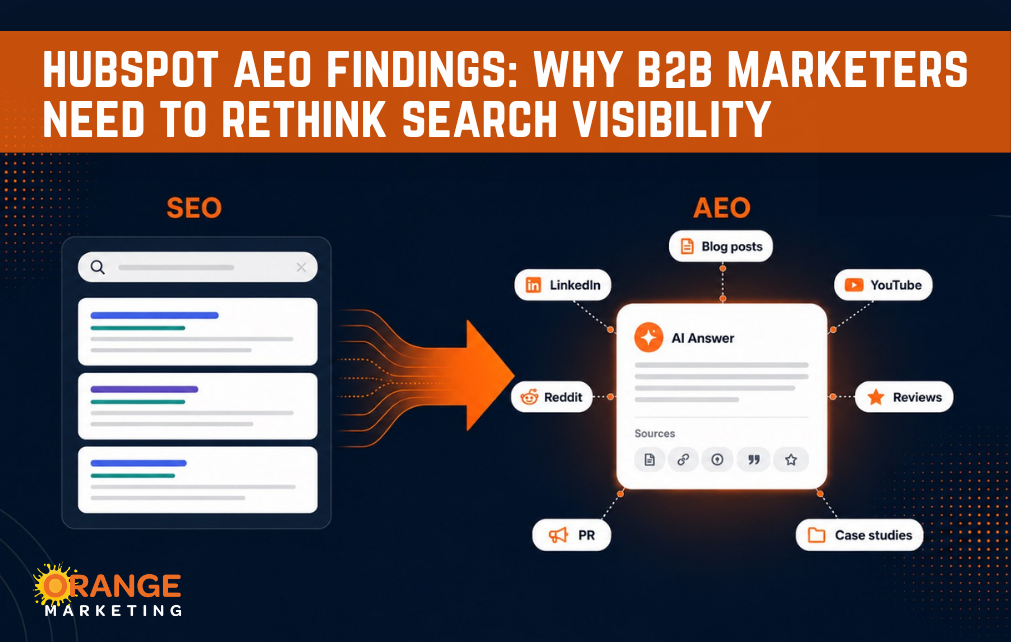
AI search is one of the key places buyers now go to research problems and compare vendors, a point Aja Frost, Credit to Aja Frost Sr. Director of Global Growth & Paid at HubSpot emphasized on a recent episode of AirOps while presenting HubSpot’s latest AEO findings.
A week later, our own Rebecca Gonzalez built on that discussion in a presentation translating HubSpot's findings into practical guidance for B2B teams. Together, the takeaway was clear: SEO is not dead, but answer engines have changed what it takes to be found, understood, and recommended.
|
These changes are huge. According to the March 2026 analysis Aja cited, AI monthly sessions are now 56% the size of search worldwide. But traffic is only part of the story. Aja’s framing makes it clear that AI visibility can show up in more than one way. A brand mention in an AI answer can help buyers discover or recognize your company, even when there is no link attached. A citation gives buyers a clickable path back to your site. |
For marketers, both matter. Mentions build awareness and credibility. Citations create a direct opportunity for traffic, engagement, and further research.
Blogs Still Matter
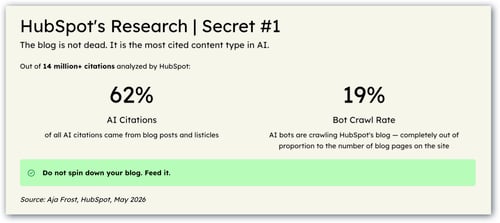
Falling organic traffic has led some teams to question blogging. HubSpot’s data suggests it remains essential. In an analysis of 14 million AI citations, 62.1% came from blog posts and listicles. HubSpot also found, in its own log analysis, that AI bots visited blog content disproportionately compared with the number of blog pages on a site.
One of Aja’s clearest examples was HubSpot’s own pricing content. When ChatGPT was surfacing outdated pricing details, HubSpot published pricing blog posts to give answer engines a clearer, fresher source to reference.
Blogs still help answer engines understand your expertise, products, and point of view. The approach, however, must change. Content should serve at least two audiences: humans, Google, and answer engines (ChatGPT, Claude, Perplexity, etc.). If your content serves only one audience, it is likely not worth your time.
From Keywords to Context
|
SEO once focused on keywords. AEO focuses on questions. Buyers now use detailed, context rich prompts rather than short phrases. Content must match that specificity. Effective formats include use case pages, industry and persona pages, comparison content, FAQ driven education, and tightly focused case studies. |
Make Answers Easy to Use
Answer engines favor content that is easy to interpret and reuse. HubSpot identified common traits among cited pages, including question based headings, FAQ sections and schema, clear titles, TL;DR summaries, visible update dates, fresh examples, current data, and proprietary data.
Freshness also matters. Aja emphasized that this is not about changing the publish date and calling it done; it means updating stats, adding recent examples, refreshing expert input, and making the last updated date visible.
|
Original data is especially important. If you cite someone else’s statistic, the engine may credit the original source instead. Publishing your own data strengthens attribution and authority. This is where proprietary data becomes a real advantage, especially for B2B teams with customer outcomes, benchmarks, or implementation insights to share. Useful examples include customer outcomes, case study results, CRM benchmarks, implementation data, before and after metrics, and expert insights from your team. The goal is clarity and credibility, not volume. |
Backlinks May Matter Less for AI Visibility
Backlinks remain important for traditional SEO, but they did not reliably predict AI visibility in HubSpot’s findings. Pages with limited authority still appeared in answers when they clearly addressed a question.
This creates an opening for smaller B2B companies. Clarity, specificity, and structure can outweigh scale.
Rebecca shared an example from Orange Marketing. A focused Eloqua migration case study surfaced in ChatGPT and helped generate a qualified opportunity. The win came from answering a specific question well, not from brand size.
Off Site Signals Matter
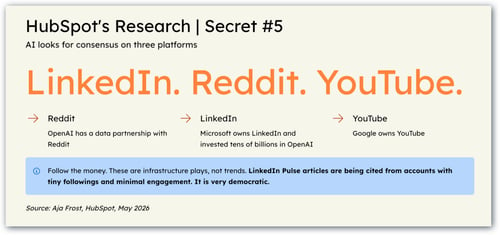
Answer engines look beyond your website. HubSpot highlighted LinkedIn, Reddit, and YouTube as three major places answer engines appear to use for consensus signals.
For B2B teams, this can include executive and employee content on LinkedIn, well structured YouTube videos with transcripts, and participation in relevant Reddit communities.
The practical approach is to focus. Choose the platform most relevant to your audience and build consistent signals there.
Fix What AI Can See
|
Small technical issues can limit visibility. Rebecca pointed to common fixes such as robots.txt restrictions, missing FAQs, weak About pages, unclear URLs, incomplete contact details, and missing schema. These issues may seem minor, but they affect how easily answer engines assess trust. Older technical decisions or unclear structures can block important signals. Clarity improves visibility. |
Track Trends Over Time
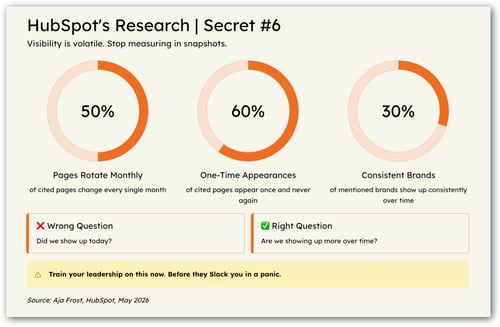
AI visibility changes quickly. A single prompt on a single day does not reflect performance.
Tracking matters. Tools like HubSpot’s prompt visibility features help monitor how often a brand appears across key prompts. The goal is not a single appearance, but consistent growth over time.
What to Do First
HubSpot and Rebecca point to a clear starting set of actions. Identify the questions your buyers are asking. Update five existing blog posts with stronger structure, FAQs, and fresh data. Build five focused pages around use cases, industries, or personas. Strengthen one off site channel. Review technical trust signals. Track visibility trends.
Rebecca also noted that AI sourced leads often arrive more informed. They may need a faster, more direct sales response.
AEO and PR Are Converging
AEO is not about gaming AI search. It is about making your brand easier to understand, verify, and recommend, both through strong site content and credible third-party proof such as earned media, reviews, awards, customer stories, expert commentary, LinkedIn visibility, and YouTube content.
That is where AEO and PR start to overlap. B2B brands need content that answers buyer questions clearly, and they also need public credibility that supports those answers.
Orange Marketing is exploring that connection in Earn the Answer: PR and AEO Tactics That Get You Found in AI Search, a live session featuring Rebecca Gonzalez and Evan Nierman of Red Banyan.
If buyers are asking AI who to trust, who to compare, and who belongs on the shortlist, your brand needs more than visibility. It needs evidence. Register for the session to learn how to earn the answer.
