Monica Cavanagh
 Missed our live AEO session? You'll want to catch up on this one! On April 17, our CEO Rebecca Gonzalez led a powerful and timely conversation with Patrick Moorhead of AI Trust Signals and Tyler Vance of Funnel Clarity. The discussion drew from real-life examples, offered practical changes, and dissected an uncomfortable reality many B2B marketing teams are facing: AI tools are already influencing opinions about your company before buyers ever reach your website.
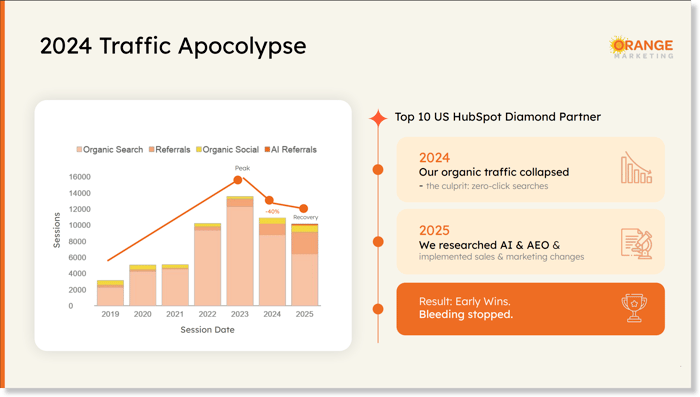
Rebecca opened by framing the issue personally. Orange Marketing saw its organic search performance drop sharply in 2024, then spent 2025 working to recover. That made our webinar more than a theory session. It was a look at what the team changed, why those changes mattered, and what B2B marketers can learn from the results.
CLICK HERE FOR THE RECORDING:
What AI Knows About Your Brand: AEO Expert + Early Client Results!
AI Rewards Clarity, Credibility, and Structure
One of the most useful themes to come up in the session was Patrick's explanation that "AI is lazy." His point was not that LLMs are unsophisticated. It was that they favor information that is easy to find, easy to verify, and easy to reuse with confidence. That idea showed up throughout the discussion and helps explain why relatively straightforward site changes can make a meaningful difference.
Tyler walked through key changes Funnel Clarity made with Orange Marketing and AI Trust Signals guiding the process::
- Build a true FAQ page instead of scattering answers across product pages and blog posts
- Strengthen your About page with clear attribution, leadership credibility, LinkedIn profiles, and published work
- Stop being clever with page names and URLs when clarity would serve buyers and AI better
- Make sure AI crawlers can access your privacy policy and terms pages
- Treat schema as basic housekeeping, not optional technical cleanup
What B2B Marketers Should Take From Tyler's Case Study
 The FAQ point raised was especially strong. Funnel Clarity had answers across the site already, but AI was struggling to pull them together. Building a dedicated FAQs page with 60-70 questions made it easier for AI tools to surface the company's expertise. Patrick's framing was sharp: if you want AI to use your information, serve it "on a silver platter."
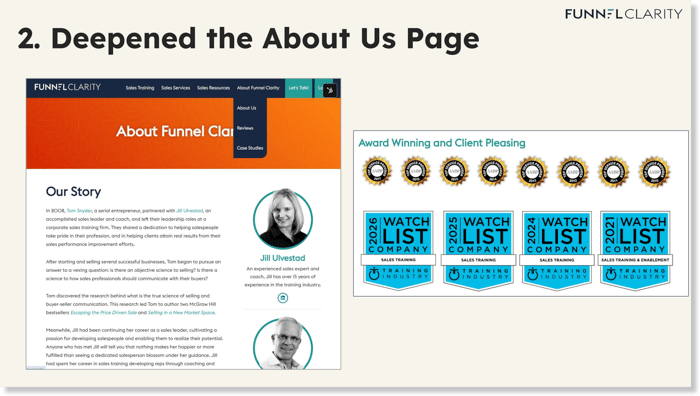
The About page discussion was equally important. Tyler deepened the page with co-founder details, LinkedIn profile links, and references to books the founders had authored. Patrick connected this to a broader principle: AI prefers verifiable information from identifiable people over unattributed content. Authority is not only about what you say. It is about whether AI can trust who is saying it.
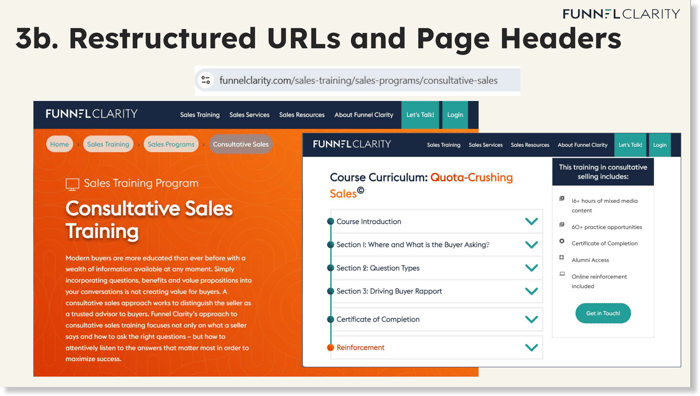
The conversation around headers and URLs will hit home for many B2B marketers. Tyler admitted Funnel Clarity had been "too cute" with page titles, using branded names that did not clearly describe the content. Patrick's advice was blunt: AI rewards literal language, not poetic positioning. If your page is about consultative sales training, say that.
The Tactical Details People Tend To Miss
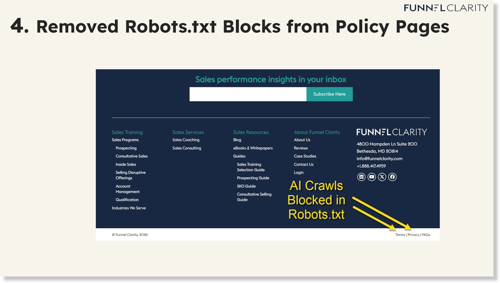 Tyler said one of his biggest surprises was learning that AI wants to read your privacy policy and terms pages. Patrick explained why: those pages help AI confirm your company is real, legally grounded, and consistent. That is a major shift from conventional SEO habits that encouraged blocking robots from functional pages.
The contact page lesson was equally practical. Funnel Clarity added a simple response commitment: "You'll hear back from us in 24 hours." Patrick argued that public commitments like that help both human buyers and AI form a stronger picture of the business. They signal reliability and make the company feel safer to recommend.
Schema came up in a way that kept it accessible. Tyler used AI tools to help generate and refine the markup. Patrick described schema as "housekeeping" and "table stakes," not a magic bullet, but essential for helping machines understand your business across platforms.
Patrick Moorhead's AEO Insights Are Worth A Replay On Their Own
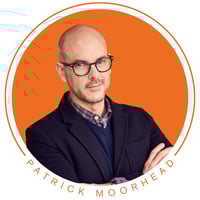 Patrick explained that AI Trust Signals is a joint venture with Marcus Sheridan, author of They Ask, You Answer and Endless Customers, and was built to answer a more useful question than simple visibility tracking: not just whether your brand shows up, but why.
He then shared several updates B2B marketers should pay attention to now:
- YouTube and Reddit have been dominant cited sources in LLMs over the last six months
- LinkedIn is emerging as a top-cited source, especially for substantive articles
- ChatGPT and Claude may miss schema injected by plugins, even when Google can read it
- Google Business Profiles are effectively invisible to LLMs, so reviews need to live elsewhere too
- Authority in AI can be organized through three lenses: owned, influenced, and earned
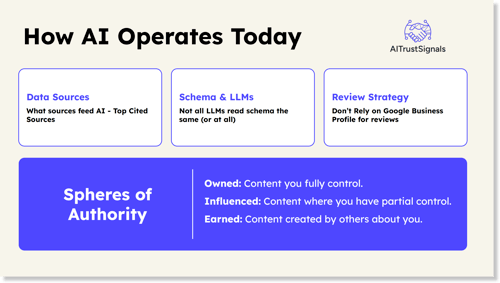
That last framework may be the most useful takeaway from the whole session. Owned means assets you control directly. Influenced means reviews, partner mentions, and third-party contributions. Earned means press coverage and broader reputation signals. It is a practical way to organize where to invest.
The Q&A Sharpened the Advice Even Further
Our live session included 30 minutes of Q&A so marketers could obtain some insights on what they're currently working on. During this segment, Patrick gave content tips. He recommended keeping blog articles under a simple, predictable URL structure like domain.com/blog/article-title, rather than publishing articles in scattered or unclear locations on your site. He added that AI often only reads the first 30% of a page, so leading with a literal headline and answering questions immediately is important.
When asked how long it takes to see improved AI leads after implementing AEO, Tyler reported Funnel Clarity saw movement within a month. Patrick added that owned changes can move even faster, sometimes within 24 hours, while influenced and earned efforts take longer.
Get the Recording
If your company is depending on old SEO assumptions, this replay is imperative to watch. It will give you a concrete sense of how AI is assessing your brand and what you can change first. Get the recording and learn how to make headway into AI recommendations to connect with your buyers!